Tabaristan (c. AD 780–793) AR Hemidrachm – Choice AU
Description
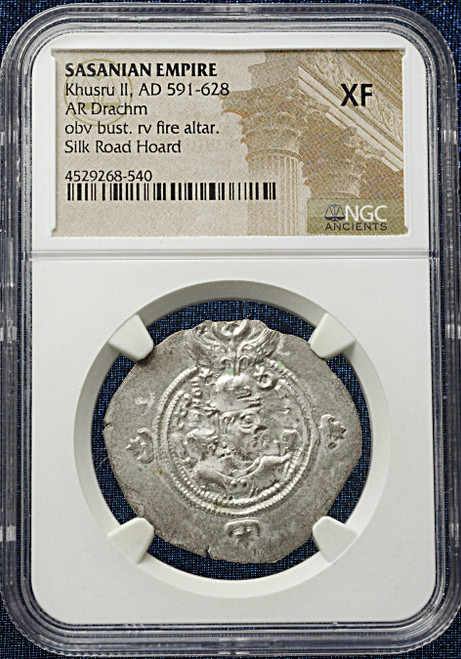
This ancient silver coin was struck in the region of Tabaristan (Tapuria) during the late eighth century AD, approximately AD 780–793. It is an AR hemidrachm, a silver denomination that continued the long-standing Sasanian monetary tradition after the Islamic conquest of Persia.
Graded Choice About Uncirculated (Ch AU), this coin displays excellent preservation, strong remaining details, and attractive surfaces. The obverse features a crowned royal bust, while the reverse depicts the traditional Zoroastrian fire altar with attendants, a design inherited directly from Sasanian coinage.
Tabaristan coinage is historically important because local rulers maintained Sasanian artistic and monetary traditions for generations after the fall of the Sasanian Empire. These coins provide a fascinating link between ancient Persian imperial coinage and the early Islamic world.
Specifications
- Region: Tabaristan (Tapuria)
- Date: c. AD 780–793
- Denomination: Silver Hemidrachm
- Composition: Silver (AR)
- Grade: Ch AU (Choice About Uncirculated)
- Obverse: Crowned royal bust
- Reverse: Zoroastrian fire altar with attendants
- Historical Period: Early Islamic Persia / Sasanian Tradition
Historical Significance
The silver coinage of Tabaristan is notable for preserving Sasanian imagery, including the royal portrait and sacred fire altar, long after the Sasanian Empire had ended. These issues reflect the continued cultural influence of pre-Islamic Persia and the importance of silver coinage along regional trade routes.
The combination of excellent preservation and traditional Persian imagery makes this type particularly appealing to collectors of Sasanian, Islamic, and Silk Road coinage.
Note
Ancient coins were individually hand-struck, making each specimen unique. Variations in strike quality, centering, legends, toning, patina, and surface texture are normal characteristics that contribute to the individuality and historical character of each coin.