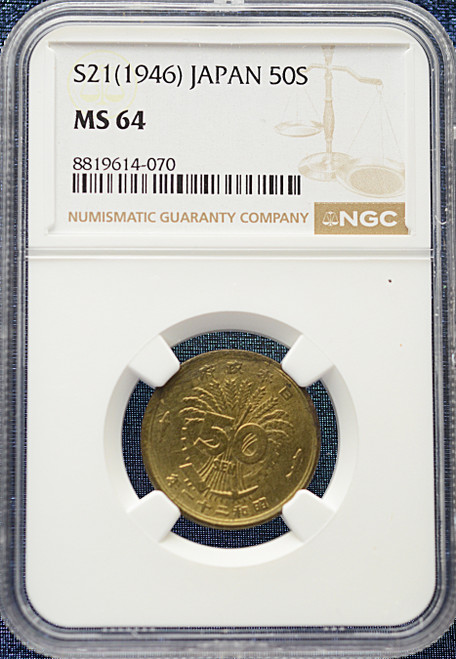
Japan 50 Sen — Shōwa Year 22 (1947), Small Size — NGC MS 63
A beautiful 1947 Japan 50 Sen, struck during Shōwa Year 22 under Emperor Hirohito, in the difficult years immediately following World War II. This coin belongs to Japan's postwar small-size 50 Sen series and reflects the country's transition from wartime economy toward reconstruction and a new postwar financial system.
The design is particularly attractive and richly symbolic. The obverse features wheat and rice stalks, representing agriculture and Japan's food-producing economy, flanked by fish and accompanied by traditional agricultural tools. The reverse depicts a phoenix flying among clouds, with a chrysanthemum emblem above and the denomination below. The phoenix is especially appropriate for this period, symbolizing renewal and rebirth as Japan rebuilt after the devastation of the war.
The denomination is 50 Sen, equal to one-half of a Japanese yen under the pre-1954 monetary system. The coin is struck in brass and has a reeded edge. The 1947 small-size issue was produced in very large numbers, with approximately 849 million pieces struck.
What makes this particular example noteworthy is its NGC certification in MS 63 (Mint State). The MS 63 grade indicates an attractive uncirculated example retaining its original mint-state surfaces, with only minor imperfections consistent with the grade.
According to the NGC population information provided, only 2 examples are graded MS 63, with 11 examples graded higher. This gives the coin an interesting place within the certified population, particularly for collectors seeking high-grade examples of Japan's postwar coinage.
A visually appealing and historically important piece, this 1947 50 Sen combines a striking phoenix design, postwar Japanese history, and a strong Mint State grade, making it an excellent addition to a collection of Japanese or world coins.