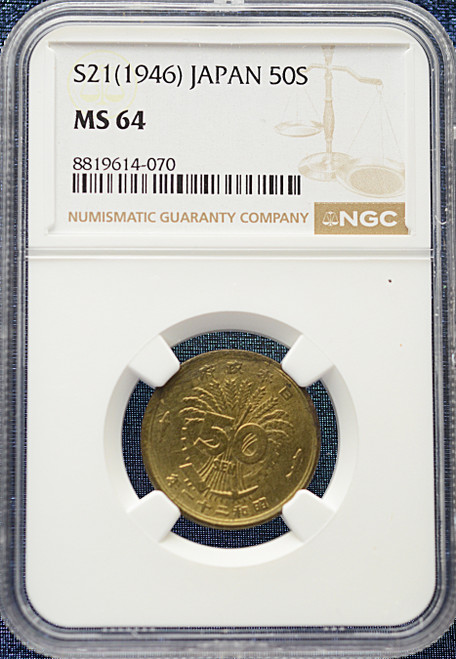
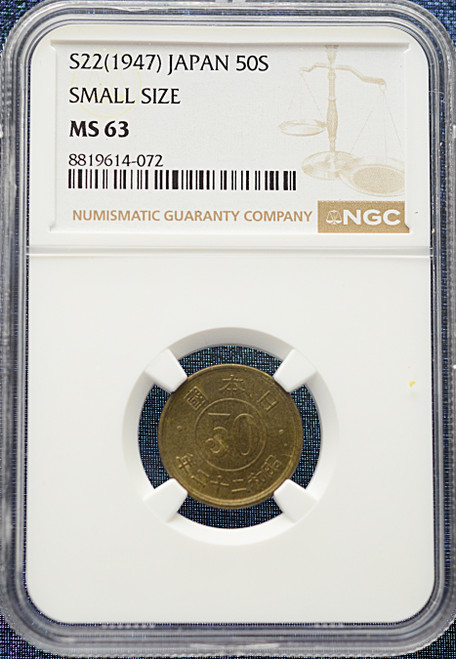
Japan 5 Sen — Shōwa Year 9 (1934), NGC MS 62
A beautiful 1934 Japan 5 Sen, dated Shōwa Year 9, from the reign of Emperor Hirohito. This coin was struck during the early Shōwa period, a fascinating era in Japanese history when the country was undergoing major economic, industrial, and political changes.
The coin features a distinctive central hole surrounded by decorative rings and cherry blossoms. The Japanese inscription identifies Great Japan and Shōwa Year 9. The reverse displays a spread-winged bird beneath the Imperial chrysanthemum, surrounded by rays of sunlight, with the denomination 5 SEN prominently displayed. The combination of the central hole, cherry blossoms, chrysanthemum, and bird gives this issue a particularly attractive and distinctly Japanese appearance. The Smithsonian's National Numismatic Collection also identifies these design elements on its 1934 example.
The 1934 5 Sen is struck in nickel, measures approximately 19 mm, and weighs about 2.8 grams. Approximately 33.85 million pieces were produced for the year.
This example has been professionally certified by NGC as MS 62 (Mint State), indicating an uncirculated coin with strong remaining mint detail and attractive overall preservation.
According to the NGC population information provided, only 1 example is graded MS 62, with 20 examples graded higher. This makes the coin particularly interesting for collectors who appreciate certified Japanese coinage and seek examples with documented NGC populations.
Beyond its numismatic appeal, this coin represents an important period of Japanese history. The Shōwa era would soon bring Japan into the turbulent years of the late 1930s and 1940s, making this 1934 issue a fascinating example of Japanese coinage from the years immediately preceding World War II.
A visually appealing and historically interesting 1934 Japanese 5 Sen in NGC MS 62, combining classic Japanese symbolism, an attractive nickel design, and a notably small NGC population at the certified grade.