Japan 50 Sen — Shōwa Year 21 (1946), NGC MS 64
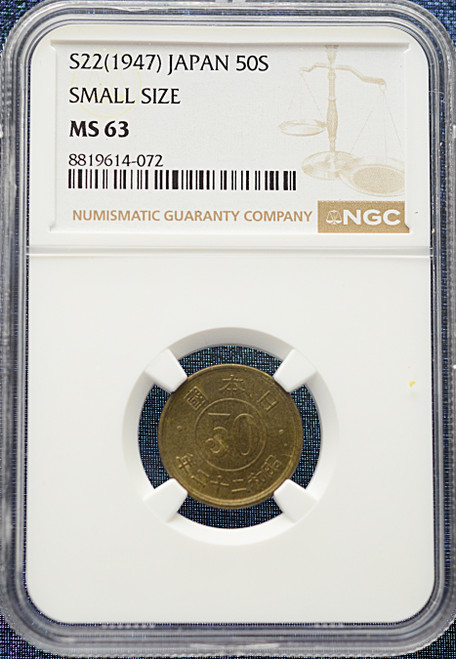
A beautiful 1946 Japan 50 Sen, dated Shōwa Year 21, and struck during the immediate postwar period under Emperor Hirohito. This coin is part of Japan's early postwar brass coinage, introduced as the country began rebuilding its economy and monetary system following World War II.
The design is both attractive and highly symbolic. The obverse features a bundle of wheat and rice, flanked by fish, with traditional agricultural tools and the denomination 50 SEN at the center. The imagery reflects the importance of agriculture and food production to postwar Japan. The reverse features a phoenix rising among clouds, with the Imperial chrysanthemum above and the denomination below. The phoenix is an especially fitting symbol for the era, representing rebirth, renewal, and Japan's recovery after the war.
The coin is struck in brass, weighs approximately 4.5 grams, and measures about 23.5 mm in diameter. The 1946 issue had a mintage of approximately 268,161,000 pieces.
What makes this example particularly desirable is its NGC MS 64 (Mint State) grade. MS 64 represents a high-quality uncirculated coin with strong overall preservation and attractive mint-state characteristics.
According to the NGC population information provided, 54 examples are graded MS 64, with only 73 examples graded higher. While the original mintage was substantial, high-grade certified examples remain considerably more desirable to collectors.
The coin also has strong collector appeal because it represents a fascinating moment in Japanese history—the transition from wartime Japan to the country's postwar reconstruction. The combination of the phoenix design, agricultural symbolism, brass composition, and high Mint State grade makes this an excellent addition to a collection of Japanese, world, or postwar coinage.
A beautiful and historically meaningful 1946 Japanese 50 Sen in NGC MS 64, offering both strong eye appeal and an important connection to Japan's postwar recovery.