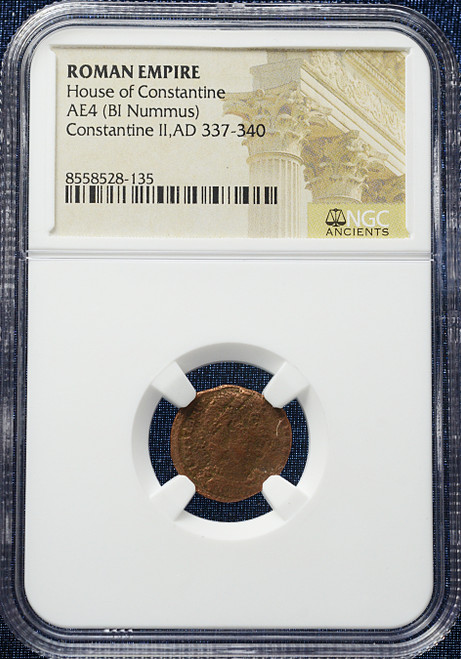
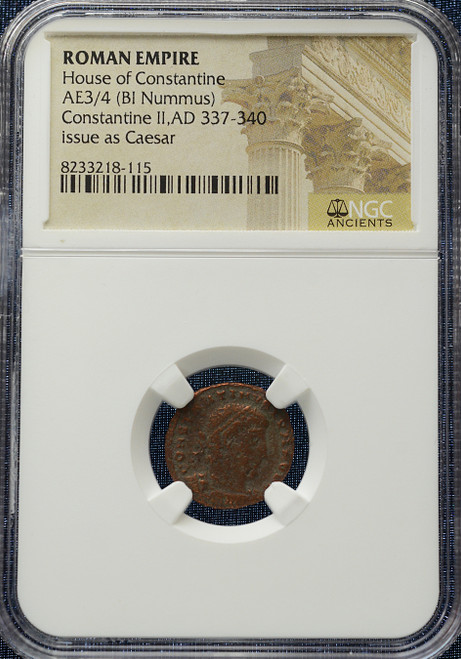
Julian II (AD 360–363) Roman Empire AE4 Nummus – House of Constantine
Description
This ancient Roman coin was issued during the reign of Julian II, known to history as Julian the Apostate, who ruled the Roman Empire from AD 360 to 363. It is an AE4 nummus, a small bronze denomination of the Late Roman Empire.
Originally a member of the House of Constantine, Julian was appointed Caesar by Emperor Constantius II in AD 355 and later proclaimed Augustus by his troops in AD 360. After becoming sole emperor in AD 361, Julian attempted to revive traditional Roman religious practices before his death during a military campaign against the Sasanian Empire in AD 363.
Specifications
- Ruler: Julian II (as Caesar / later Augustus)
- Dates of Issue: AD 360–363
- Empire: Roman Empire
- Dynasty: House of Constantine
- Denomination: AE4 Nummus
- Composition: Bronze (AE), often with traces of original silvering
- Date Struck: AD 360–363
- Historical Period: Late Roman Empire
Historical Significance
Coins of Julian II are highly valued by collectors because they represent one of the final chapters of the Constantinian dynasty and the brief religious transition that occurred after Constantine's Christian reforms. His coinage often features distinctive portraits and reverse types reflecting imperial authority, military strength, and traditional Roman symbolism.
Pedigree
Decline & Fall of Rome Collection.
Note
Ancient Roman coins were individually hand-struck, making every specimen unique. Variations in strike quality, centering, legends, patina, and remaining silvering are normal characteristics that contribute to the individuality of each coin.