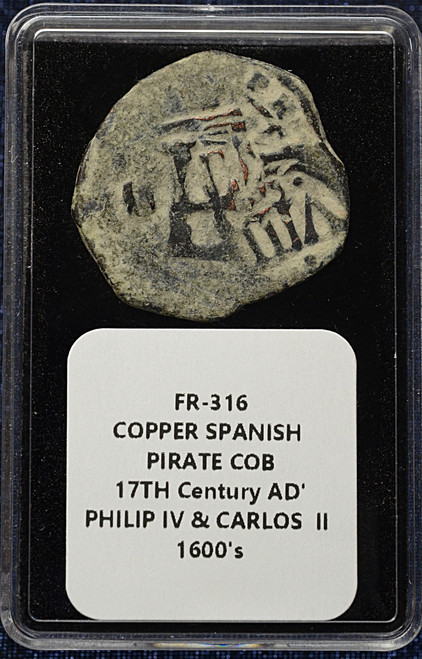
Spanish Colonial Copper Cob Coin – Philip III, Philip IV & Carlos II – 16th–17th Century Treasure Coin
Spanish Pirate Cob Copper Coin – 16th–17th Century – Habsburg Spain
Own a fascinating piece of the Spanish Empire with this authentic Spanish Colonial Copper Cob, dating from the 16th–17th century AD during the reigns of Philip III, Philip IV, and Carlos II of Spain.
Known as one of the original "treasure coins," cobs were hand-struck Spanish colonial coins produced throughout the Americas at mints such as Mexico, Peru, and Colombia. Their irregular shapes, crude appearance, and historic connection to the great Spanish treasure fleets have made them among the most recognizable and popular coins in world numismatics.
Unlike modern machine-made coins, cobs were individually hammered by hand. Each piece was cut and adjusted primarily for weight and metal content rather than appearance, resulting in unique shapes, uneven edges, and distinctive character. Every cob is different, making each example a small artifact of the Spanish colonial era.
Coin Specifications
- Country: Spanish Empire
- Period: 16th–17th Century AD
- Rulers Represented:
- Philip III (1598–1621)
- Philip IV (1621–1665)
- Carlos II (1665–1700)
- Type: Colonial Copper Cob
- Metal: Copper
- Production: Hand-struck
- Condition: Circulated / As found
About Spanish Cobs
The word "cob" comes from the Spanish term cabo, referring to the irregular pieces of metal produced during the minting process. Spanish colonial mints created these coins by cutting silver, gold, and copper strips into approximate weights, then striking them with hand-operated dies.
Because weight and fineness were more important than appearance, cob coins often display:
- Irregular shapes
- Partial legends
- Off-center strikes
- Uneven edges
- Visible mint or assayer marks
These characteristics are not flaws—they are the defining features that make cobs historically fascinating.
Historical Background
During the height of the Spanish Empire, precious metals from the Americas flowed through colonial ports and across the Atlantic through the famous Spanish treasure fleets. Coins produced in the New World became international currency, circulating throughout Europe, Asia, Africa, and the Americas.
The reign of Philip IV (1621–1665) represented both the height of Spanish imperial territory and the beginning of major financial and military challenges. Spain relied heavily on American silver and copper production to fund wars, maintain its empire, and support royal ambitions throughout Europe.
The final Habsburg ruler, Carlos II (1665–1700), inherited an empire facing economic decline and political instability, marking the end of the Spanish Habsburg dynasty.
Why Collect This Coin?
- Authentic Spanish colonial-era artifact
- Produced during the age of exploration and treasure fleets
- Over 300 years old
- Hand-struck and individually unique
- Associated with the famous Spanish Empire
- Popular with collectors of:
- Pirate coins
- Treasure coins
- Colonial coinage
- Maritime history
- Spanish Empire collectibles