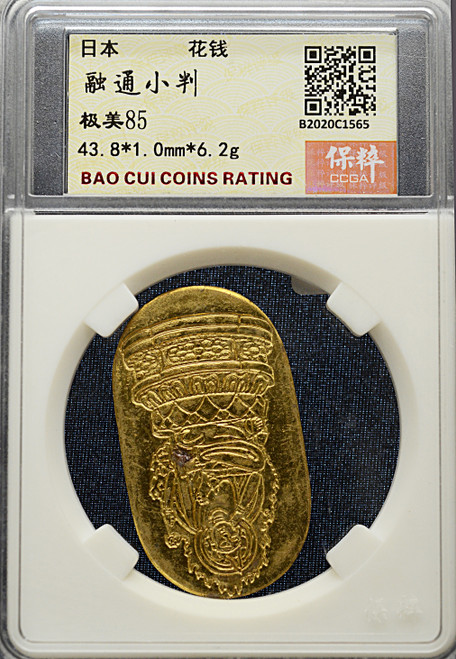
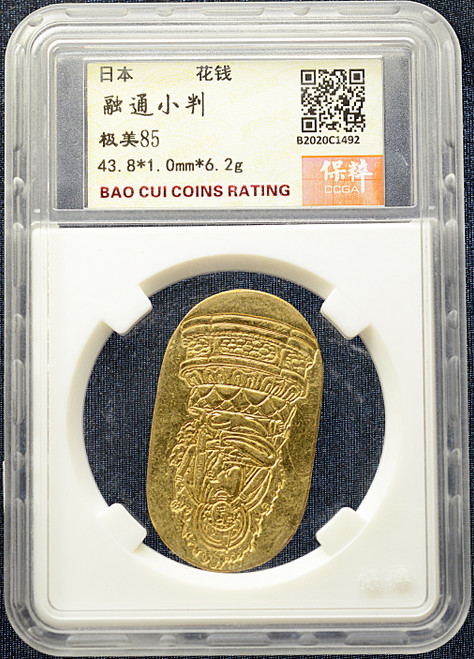
Showa Japan Yūtsū Koban Cintamanicakra Avalokitesvara Flower Money Token – Gilt – 6.2 Grams
A unique Japanese collectible, this Showa Era Yūtsū Koban Cintamanicakra Avalokitesvara Flower Money Token combines the traditional Koban shape with Buddhist symbolism, creating an attractive token inspired by Japan's cultural and spiritual heritage.
Produced during the Showa Era (1926–1989), this gilt token features imagery associated with Cintāmaṇicakra Avalokiteśvara (Nyoirin Kannon), the Buddhist Bodhisattva of Compassion, who is traditionally linked with wisdom, prosperity, and the granting of wishes. Often referred to as Flower Money, these decorative tokens were created as souvenirs, amulets, or commemorative pieces rather than circulating currency.
This example measures approximately 43.8 mm × 0.8 mm and weighs 6.2 grams. Its traditional Koban-style shape and gilt finish make it an appealing addition to collections of Japanese exonumia, Buddhist artifacts, and cultural memorabilia.
Item Specifications
- Country: Japan
- Era: Showa (1926–1989)
- Type: Yūtsū Koban Style Token / Flower Money
- Theme: Cintāmaṇicakra Avalokiteśvara (Nyoirin Kannon)
- Finish: Gilt
- Weight: 6.2 grams
- Dimensions: 43.8 × 0.8 mm
- Category: Exonumia / Religious Token / Amulet
Historical Background
Koban-shaped tokens and Flower Money pieces have long been produced in Japan as good-luck charms, religious keepsakes, and commemorative souvenirs. Many feature Buddhist imagery and inscriptions intended to symbolize prosperity, protection, longevity, and good fortune. While inspired by Japan's historic Koban gold coins, these pieces were created as collectible tokens rather than legal tender.
An attractive collectible for enthusiasts of Japanese exonumia, Buddhist art, Koban-style tokens, religious amulets, and Asian cultural collectibles.