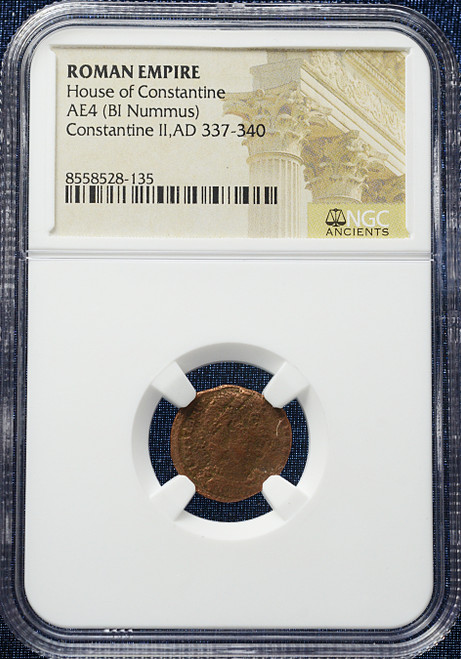
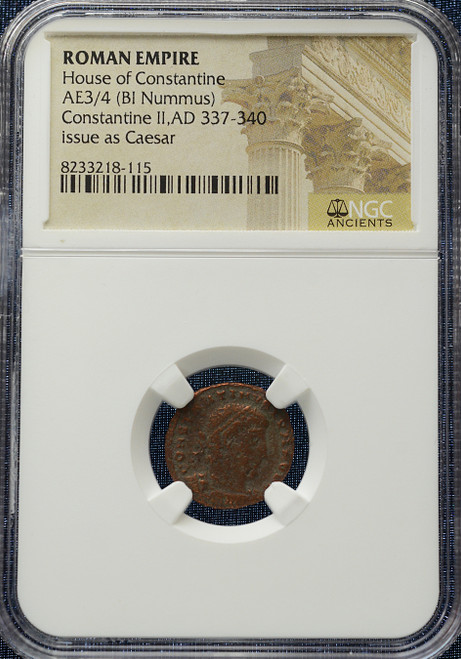
Roman Empire Constantine II Camp Gate AE Follis – 324–337 AD – Good (G)
A remarkable piece of Late Roman history, this Roman Empire AE Follis of Constantine II (324–337 AD) features the iconic Camp Gate reverse, one of the most recognizable designs of the Constantinian era.
The obverse portrays Constantine II, eldest son of Constantine the Great, who became Caesar in 317 AD and later ruled as Augustus. The coin was issued during a period when the Roman Empire was being transformed by the reforms and legacy of Constantine the Great, including the rise of Christianity and the establishment of a new imperial order.
The reverse depicts a Roman camp gate, symbolizing military strength, security, and the power of the imperial army. The gate is typically shown with towers and sometimes a star above, representing protection and victory. The surrounding inscriptions and mint marks identify the issuing authority and Roman mint where the coin was produced.
This example is graded Good (G), showing significant ancient circulation wear consistent with its age. The portrait and reverse design remain identifiable, while the coin retains the authentic surfaces, patina, and character expected from a bronze coin that circulated nearly 1,700 years ago.
Coin Details
- Ruler: Constantine II
- Date: 324–337 AD
- Empire: Roman Empire
- Denomination: AE Follis
- Reverse Type: Camp Gate
- Metal: Bronze
- Grade: G (Good)
- Condition: Ancient circulated coin with natural patina
A fascinating addition for collectors of Ancient Rome, Constantine-era coinage, and Late Roman bronze issues, this Constantine II Camp Gate Follis provides a direct connection to the soldiers, citizens, and political changes of the 4th-century Roman Empire.
Please examine the photographs carefully for the exact mint mark, inscriptions, reverse details, patina, and overall condition.