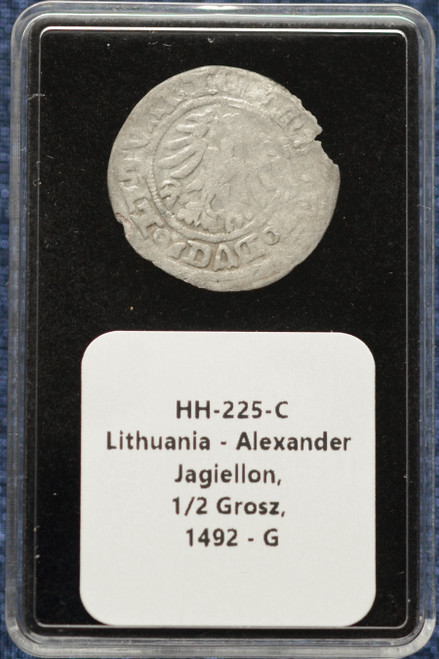
Lithuania – Alexander Jagiellon, 1/2 Grosz, 1492 – G Details
GRAND DUCHY OF LITHUANIA – ALEXANDER JAGIELLON (1492–1506). 1/2 GROSZ, 1492. Gothic and Renaissance Lettering. G Details.
A fascinating late 15th-century Lithuanian silver half-grosz, struck during the reign of Alexander Jagiellon, Grand Duke of Lithuania from 1492 and later King of Poland.
This coin represents an important period of transition in European history, when the medieval world was beginning to give way to the Renaissance. Its lettering is particularly interesting: the obverse uses Renaissance-style lettering, while the reverse retains Gothic-style lettering, providing a remarkable visual example of the transition between medieval and Renaissance coinage.
Historical Background
Alexander Jagiellon was a member of the powerful Jagiellonian dynasty, which ruled extensive territories in Central and Eastern Europe. During his reign as Grand Duke of Lithuania, the Grand Duchy remained one of the largest political entities in Europe.
The year 1492 is especially significant. It marked the beginning of Alexander's reign in Lithuania and also the year in which Christopher Columbus reached the Americas, traditionally regarded as the beginning of a new era of European exploration.
This small silver coin was produced in a Europe undergoing enormous political, cultural and artistic change. The mixture of Gothic and Renaissance lettering makes it an especially appealing piece for collectors interested in the transition from the Middle Ages to the Renaissance.
Coin Details
- Country/State: Grand Duchy of Lithuania
- Ruler: Alexander Jagiellon
- Date: 1492
- Denomination: 1/2 Grosz
- Metal: Silver
- Period: Late Medieval / Early Renaissance
- Lettering: Renaissance-style obverse; Gothic-style reverse
- Grade: G Details
- Age: Over 530 years old
A historically fascinating Lithuanian coin from the dawn of the Renaissance, combining medieval Gothic tradition with emerging Renaissance lettering. An excellent addition to a collection of Lithuanian, Polish-Lithuanian, medieval or Renaissance coinage.
Please examine the photographs carefully for the exact surfaces, patina, centering, wear and reason for the “G Details” designation.