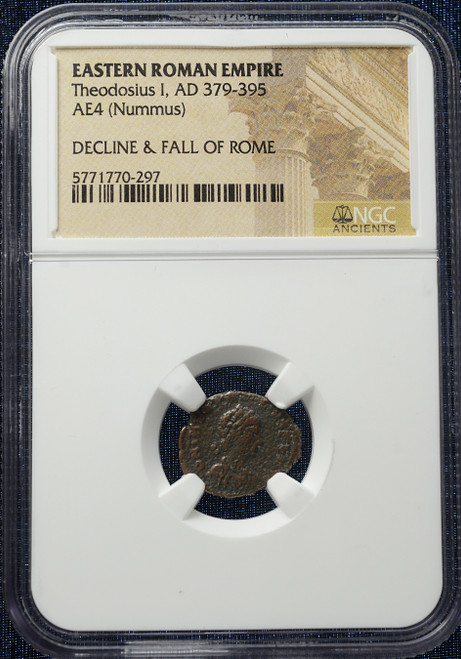
Licinius I (AD 308–324) Roman Empire BI Reduced Nummus
Description
This ancient Roman coin was struck during the reign of Licinius I, Roman Emperor from AD 308 to 324. It is a billon (BI) Reduced Nummus, a small denomination issued during the monetary reforms of the early fourth century.
Licinius rose to power during the period of the Tetrarchy, a time when multiple emperors governed different regions of the Roman Empire. He controlled the eastern provinces and later shared power with Constantine the Great following the Edict of Milan in AD 313, which granted religious tolerance throughout the empire. Their alliance eventually collapsed, leading to civil war and Licinius’ defeat by Constantine in AD 324.
Specifications
- Ruler: Licinius I
- Dates of Reign: AD 308–324
- Empire: Roman Empire
- Denomination: Reduced Nummus
- Composition: Billon (BI) / bronze with traces of silvering
- Date Struck: AD 308–324
- Historical Period: Late Roman Empire
Historical Significance
Coins of Licinius I provide a tangible connection to one of the most important political transitions in Roman history—the end of the Tetrarchy and the rise of Constantine the Great as sole ruler of the Roman Empire.
These issues often feature military and religious imagery, including representations of Jupiter, Roman standards, and imperial victory themes, reflecting the political struggles and changing identity of the empire during the early fourth century.
Licinius I (AD 308–324) Billon Reduced Nummus is a popular early fourth-century Roman coin from the period of the Tetrarchy and the rise of Constantine the Great. Licinius ruled the Eastern Roman Empire for more than a decade and is best known as Constantine’s final imperial rival before his defeat in AD 324.
Label
1873
Note
Ancient Roman coins were individually hand-struck, making each specimen unique. Variations in strike quality, centering, legends, patina, remaining silvering, and wear are normal characteristics that contribute to the individuality and historical character of each coin.