Constantinian Era (c. AD 330–340) Roman Empire AE3/4 (BI Nummus) – XF
Description
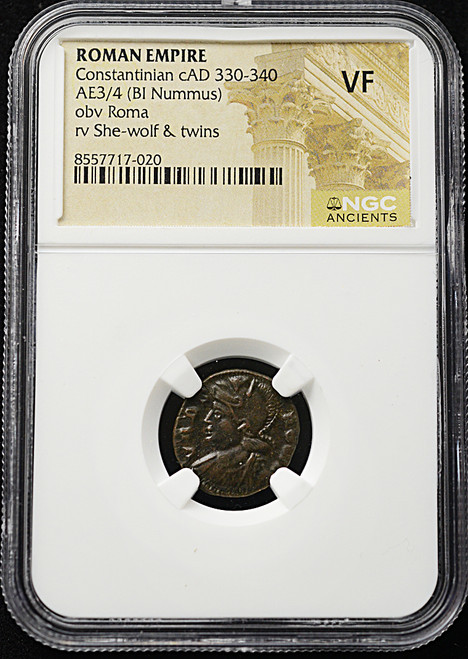
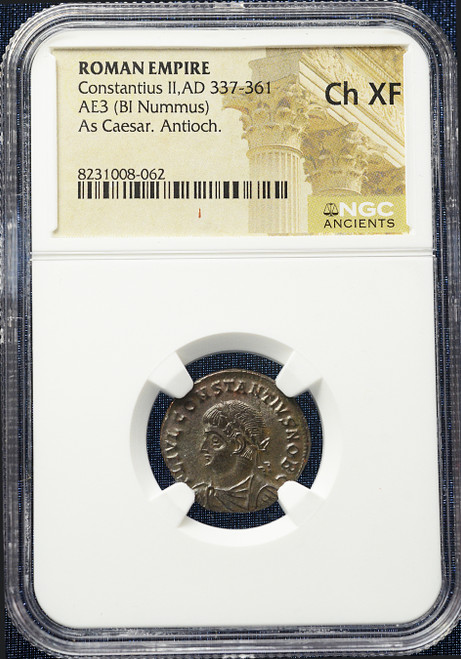
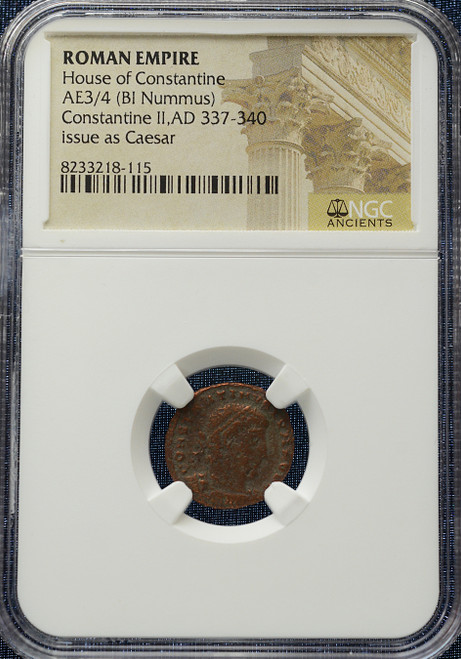
This ancient Roman coin was struck during the Constantinian period, approximately AD 330–340, following the reforms and legacy of Constantine the Great. It is an AE3/4 nummus, a small bronze denomination of the Late Roman Empire, often described as bronze with traces of billon (BI) or silver wash.
Graded Extremely Fine (XF), this coin displays strong remaining details, including a well-preserved design and attractive overall appearance.
The reverse features Roma seated with the she-wolf suckling the twins Romulus and Remus, one of the most recognizable symbols of Roman identity. This imagery celebrates the legendary foundation of Rome and connects the coin directly to one of the most enduring myths of the ancient world.
Specifications
- Type: Constantinian Era Issue
- Date: c. AD 330–340
- Empire: Roman Empire
- Denomination: AE3/4 Nummus
- Composition: Bronze (AE), often with traces of silvering
- Grade: XF (Extremely Fine)
- Reverse Type: Roma / She-wolf and twins
- Historical Period: Late Roman Empire
Historical Significance
Coins featuring the she-wolf and twins were issued during a period when Rome’s ancient traditions were being celebrated alongside the new Christian identity of the empire. The imagery served as a reminder of Rome’s legendary origins and the enduring power of the imperial capital.
The Constantinian era represents one of the most important transitions in Roman history, including the rise of Christianity, the founding of Constantinople, and major administrative reforms that shaped the later Roman and Byzantine worlds.
Constantinian Era (c. AD 330–340) Roman Empire AE3/4 (BI Nummus) – XF
Description
This ancient Roman coin was struck during the Constantinian period, approximately AD 330–340, following the reforms and legacy of Constantine the Great. It is an AE3/4 nummus, a small bronze denomination of the Late Roman Empire, often described as bronze with traces of billon (BI) or silver wash.
Graded Extremely Fine (XF), this coin displays strong remaining details, including a well-preserved design and attractive overall appearance.
The reverse features Roma seated with the she-wolf suckling the twins Romulus and Remus, one of the most recognizable symbols of Roman identity. This imagery celebrates the legendary foundation of Rome and connects the coin directly to one of the most enduring myths of the ancient world.
Specifications
- Type: Constantinian Era Issue
- Date: c. AD 330–340
- Empire: Roman Empire
- Denomination: AE3/4 Nummus
- Composition: Bronze (AE), often with traces of silvering
- Grade: XF (Extremely Fine)
- Reverse Type: Roma / She-wolf and twins
- Historical Period: Late Roman Empire
Historical Significance
Coins featuring the she-wolf and twins were issued during a period when Rome’s ancient traditions were being celebrated alongside the new Christian identity of the empire. The imagery served as a reminder of Rome’s legendary origins and the enduring power of the imperial capital.
The Constantinian era represents one of the most important transitions in Roman history, including the rise of Christianity, the founding of Constantinople, and major administrative reforms that shaped the later Roman and Byzantine worlds.
Pedigree
Roma / She-wolf & Twins Collection.
Note
Ancient Roman coins were individually hand-struck, making each specimen unique. Variations in strike quality, centering, legends, patina, surfaces, and wear are normal characteristics that contribute to the individuality and historical character of each coin.
Pedigree
Roma / She-wolf & Twins Collection.
Note
Ancient Roman coins were individually hand-struck, making each specimen unique. Variations in strike quality, centering, legends, patina, surfaces, and wear are normal characteristics that contribute to the individuality and historical character of each coin.