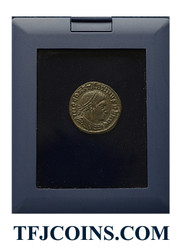
The Coin That Changed an Empire: Exploring a Bronze Follis of Constantine the Great (307–337 AD)
Nov 2nd 2026
The Coin That Changed an Empire: Exploring a Bronze Follis of Constantine the Great (307–337 AD)
Few figures in world history have reshaped an empire as completely as Constantine I, known to history as Constantine the Great. Reigning from 307 to 337 AD, his rule marked the transition of Rome from a classical pagan superpower into a Christian empire and laid the foundations for the Byzantine East.
For ancient coin collectors, holding a bronze follis from Constantine’s era isn't just owning ancient metal—it’s holding a direct tangible connection to a pivotal turning point in Western civilization.
The Historical Legacy of Constantine the Great
Constantine’s 30-year reign saw structural shifts that redefined the ancient Mediterranean:
-
The Rise of Christianity: Following his famous victory at the Battle of the Milvian Bridge in 312 AD, Constantine issued the Edict of Milan in 313 AD, granting religious tolerance across the empire and placing Christianity on a path to becoming Rome's dominant faith.
-
A New Imperial Capital: Recognizing the strategic importance of the East, Constantine refounded the ancient city of Byzantium as Constantinople ("City of Constantine") in 330 AD, shifting the empire's center of gravity eastward for the next thousand years.
-
Monetary Reform: To stabilize an economy battered by 3rd-century inflation, Constantine reformed Roman currency, establishing strong bronze denominations like the follis for everyday commerce across the empire's vast trade networks.
Coin Specifications & Visual Breakdown
-
Empire: Roman Empire
-
Ruler: Constantine the Great (Reigned 307–337 AD)
-
Denomination: Follis
-
Composition: Bronze
-
Era: Late Roman Imperial (4th Century AD)
-
Grade: XF (Extremely Fine)
Why Add a Constantinian Follis to Your Collection?
1. Exceptional Condition (XF / Extremely Fine)
Late Roman bronze coins often saw heavy circulation across soldiers' paycheques and local marketplaces. Finding a specimen in Extremely Fine (XF) condition means key architectural and portrait elements remain sharp. High-grade examples preserve crisp detail in Constantine’s imperial profile—capturing the regal stylistic shift characteristic of early 4th-century Roman die engravers.
2. A Bridge Between Ancient & Medieval Worlds
Coinage of Constantine the Great serves as a crucial bridge for numismatists. It connects classic High Empire Roman portraiture with the emerging iconographic style of the early Byzantine world.
3. Accessible History for Every Collector
https://tfjcoins.com/roman-empire-constantine-the-great-307-337-ad-follis-xf